Kali Motor Group Search


- All
- Product Management
- News
- Introduction
- Enterprise outlets
- FAQ
- Enterprise Video
- Enterprise Atlas
Smartphone vibration motor
Release time:2020-03-27
Nowadays, smart phones have become very popular and have penetrated into all aspects of people's daily life. They are inseparable from life, shopping, transportation, entertainment, and office. With the progress and development of technology, the appearance of smart phones is becoming more and more beautiful, the functions are becoming more and more perfect, and the user experience is getting better and better. In particular, the touch of the smartphone screen is becoming more and more delicate and real, because each smartphone has a built-in high-precision vibration motor to achieve interactive vibration feedback.
In the field of smart phones, vibration motors can be structurally divided into two categories: "rotor motors" and "linear motors. Among them, the principle of the rotor motor is to use electromagnetic induction to drive the rotor to rotate with the magnetic field caused by the current to generate a full range of extreme tremor experience. The advantages of rotor motors are mature technology and low cost. They are also standard for most mid-to-high-end and almost all mainstream price mobile phones.
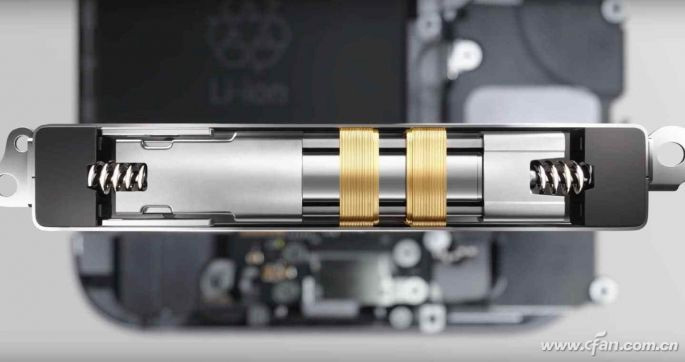
The principle of the linear motor is similar to the mechanism of the pile driver. It is a starting module that relies on a spring mass block that moves in a linear form to directly convert electrical energy into linear motion mechanical energy.
At present, linear motors can be subdivided into horizontal linear motors (XY axis) and circular linear motors (Z axis). In addition to vibration, horizontal linear motors can also bring displacement in front, back, left, and right directions, while circular linear motors can be regarded as an advanced version of rotor motors, with compact vibration and stop-and-stop experience.
Rotor motors cost about $1 per unit, while the most high quality transverse linear motors cost as much as $8 to $10 per unit, with circular linear motors in the middle.
If you used to be an iPhone user and are very infatuated with the feeling of pressing down → bouncing up when pressing the round Home key, you need more help high quality the motor.
We all know that iPhone users have long complained that the Home button is easily damaged. Therefore, Apple has canceled the physical key design since the iPhone 7 was taken, and only the style of the Home key is retained at the bottom of the lower screen, but it is only a virtual key, which needs vibration feedback to replace the touch of the physical key.
However, from iPhone 7 to iPhone 8, many users do not know that their mobile phone keys are not physical keys, because every time they press the Home key to unlock the phone, they clearly feel that the key has been "pressed"!
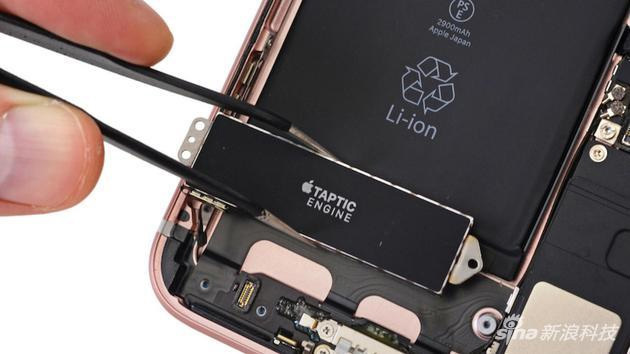
Behind this experience is a $10 "TAPTIC ENGINE" module, the credit of the LRA horizontal linear motor, which can truly simulate the click feel and obtain real-time touch feedback.
In the future, 3D structured light face unlocking and under-screen fingerprint identification technology will dominate the field of smart phones, while under-screen fingerprint technology is to touch the designated area of the screen with a finger to identify fingerprint information. The question is again, when the vast majority of mobile phones use under-screen fingerprints, what else can we compare?
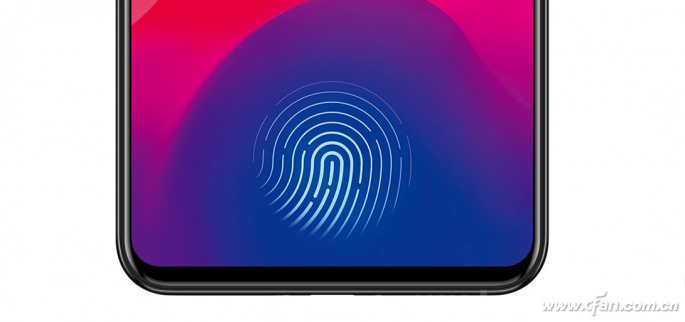
The answer is to match the virtual prompt icon with the horizontal linear motor to provide a tactile feedback experience comparable to or even surpassing the mechanical key. At the moment of unlocking, the user feels that the depressed part of the screen can really be pressed down and then bounced back. Although it is only a short moment, this real 3D Touch experience is a design that high-end users are willing to pay. Isn't that right?
Previous
Previous
Social Media