Kali Motor Group Search


- All
- Product Management
- News
- Introduction
- Enterprise outlets
- FAQ
- Enterprise Video
- Enterprise Atlas
Artificial Intelligence
Release time:2020-03-27
Intelligence is the most important trend in the manufacturing industry in recent years. After market education in the past few years, the market inquiry degree has begun to increase in the past two years. Starting from 2016, the IT industry has set off an upsurge of artificial intelligence (AI). The integration of AI and the Internet of Things will become the mainstream system in various vertical fields in the future. In the manufacturing industry, AI will also become one of the core computing architectures of the Industrial Internet of Things.
Since Germany took the lead in calling out industrial 4.0, related technologies have also advanced by leaps and bounds, including the development of industrial Internet of Things, big data analysis, robotics and other technologies, and have gradually created new types of smart factories and new industrialization standards.
Especially in recent years, the wave of artificial intelligence (AI) has hit, giving industrial 4.0 a new development direction, clarifying the differences between division automation and intelligence, including machine vision, deep learning and other artificial intelligence technologies that use algorithm analysis as the main technology. It has become a new trend in the future development of industrial 4.0, not only making automation and robot technology more accurate, but also manufacturing industry has begun to enter new scientific and technological fields such as unmanned factories.
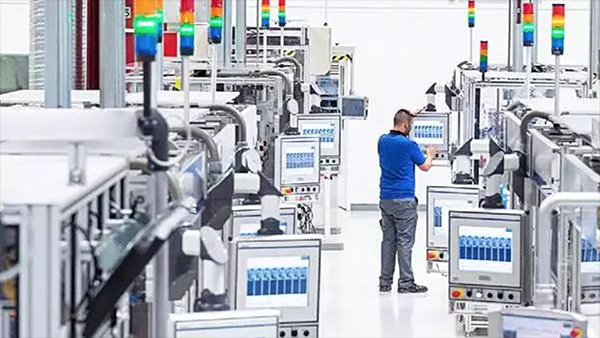
Automation is the technical foundation of modern industry, and the introduction of AI will comprehensively improve the efficiency of automation systems.
As far as the current development is concerned, there are three major trends in intelligent manufacturing. The first is the production network. This part mainly applies the manufacturing operation management system (Manufacturing Operations Management, MOM) to assist suppliers in the production value chain to obtain and exchange real-time production information. All components provided by suppliers can arrive at the production line in the right order at the right time.
The second trend is the perfect integration of virtual simulation and real physical systems. Every step in the manufacturing process will be designed, simulated and optimized in the virtual world to establish a highly simulated digital twin (Digital Twin,Twin Model) for the real physical world including materials, products, factories, etc.
The third trend is the information physical system (Cyber-Physical System,CPS). In this system, product information will be input into the product components themselves. They will directly communicate with the production system and equipment according to their own production requirements, issue the next production process instruction, and command the equipment to organize production by itself. This independent production mode can meet the customized needs of each user.
Establish operation mode with big data
The above three major trends will be integrated with AI to a certain extent in the future. For example, AI computing function design will be available in production line monitoring, robots, unmanned trucks, etc. The main reason is the trend of mass customization. The difficulty of various production situations such as product types and production line mobilization that factories need to face will also increase greatly. Although through sensor and big data analysis, managers can already master more information to help decision-making, but also because of the large increase in the amount of information, increasing the pressure on managers to analyze information, and the increasingly rapid changes in the market, the speed of human analysis may have become more and more difficult to keep up with the front-end data provided at an increasingly fast speed. Naturally, it is also more difficult to enable machines on the manufacturing site to quickly respond to customer needs. AI application in manufacturing will enable systems to find regular establishment patterns from big data analysis, then learn to avoid the previous mistakes, and even predict in advance, applied to the manufacturing field, not only can shorten the downtime, but also timely make production line adjustments, reduce the frequency of waste materials and waste.
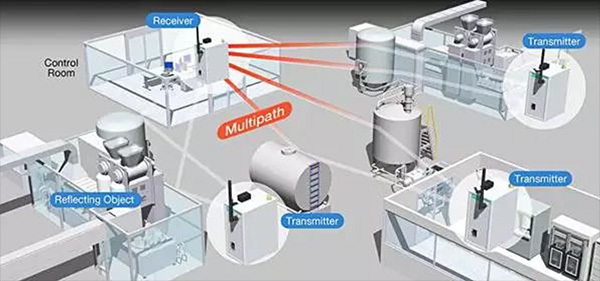
Networking is the foundation of the industrial Internet of Things architecture. In the future, AI will analyze the large amount of data obtained by the equipment network and make intelligent judgments and suggestions.
For the Industrial Internet of Things, obtaining data and analyzing data are core tasks, and data points from sensors can be transformed into actionable insights through multiple stages. The Industrial Internet of Things platform includes scalable data processing processes that can handle real-time data that requires immediate attention, and data that is meaningful only for a period of time. When an abnormal combination of pressure and temperature thresholds is detected, it may be too late for the IoT platform to close the LPG filling machine. The abnormality should be detected within milliseconds, and then the immediate response should be triggered according to the rules.
According to the current development, AI has several algorithms. For example, the core of hot spot path analysis is a rule engine responsible for detecting anomalies. The Internet of Things platform is embedded with a complex rule engine, which can dynamically evaluate complex patterns from sensor data streams. Domain experts who understand patterns and data formats define the benchmark threshold and routing logic of the rule engine. This logic serves as the key input of the rule engine in arranging message flows, the rule engine has become the core of the IoT platform to define nested statement conditions for each data point before the data point is moved to the next stage of the data processing process, and one of the key areas of machine learning is to find patterns from existing data sets, group similar data points, and predict the value of future data points.
Higher-order algorithms related to machine learning can be used for classification and predictive analysis. Because these algorithms can learn from existing data, and most IoT data are based on time series, these algorithms can predict the future value of sensors based on historical data. The combination of these multiple machine learning algorithms will replace the traditional rule engine in the industrial IoT platform, although domain experts still need to take actions based on conditional definitions, but these smart algorithms offer greater accuracy and precision.
AI HI Dramatically Enhance Efficiency
One of the biggest applications of machine learning in the Industrial Internet of Things is predictive maintenance of equipment. It predicts equipment failures through correlation and analysis of model changes, and reports key indicators such as the remaining service life of equipment. Predictive maintenance can also be applied in the future. Aerospace, manufacturing, automotive, transportation, logistics, and supply chain fields, such as arranging predictive models to automotive service centers, in the aviation industry, the goal of a predictive maintenance program is to predict the likelihood of flight delays or cancellations based on relevant data such as maintenance history and flight path information.
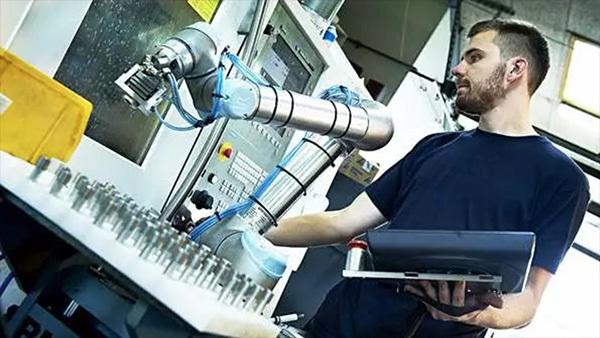
In the industrial field, AI and HI must work together to create the maximum value of the system.
Observing the development trend of the Internet of Things, the industrial Internet of Things is currently one of the fastest growing categories among all vertical applications. AI mainly assists operators and managers in the industrial Internet of Things to screen data extracted from a large number of devices and make judgments. However, the current AI cannot make logical decisions. Therefore, in the manufacturing field, AI must be combined with human wisdom to be the best benefit of the system.
Previous
Next
Previous
Next
Social Media